

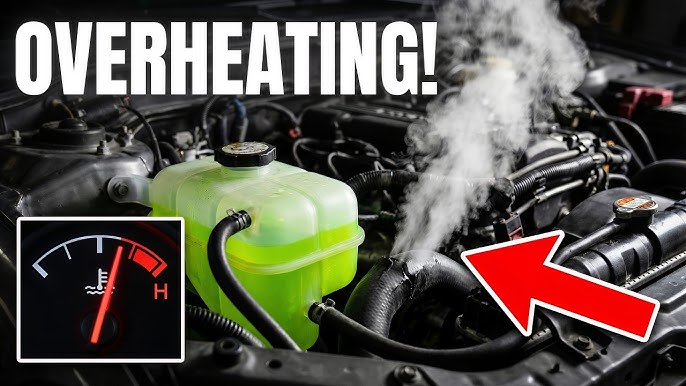
Many drivers assume that topping up coolant should immediately solve an overheating issue. So when the temperature gauge still rises in heavy traffic, it often leads to confusion and concern.
This situation is more common than most people realise, especially in urban environments where vehicles spend long periods idling or moving slowly. If your car continues to overheat despite having enough coolant, it is usually a sign of a deeper problem. In such cases, it’s important to have the vehicle checked by a Mechanic in Newcastle rather than relying on repeated coolant top-ups.
Why Adding Coolant Doesn’t Always Solve the Problem
Coolant plays a key role in regulating engine temperature. It circulates through the engine, absorbs heat, and releases it through the radiator. However, simply having enough coolant in the system does not guarantee proper cooling.
Over time, coolant can become contaminated with rust, debris, or oil residue. When this happens, its ability to transfer heat reduces significantly. Even if the reservoir appears full, the coolant may not perform effectively.
Another issue is restricted flow. Corrosion and sediment can build up inside the radiator or cooling passages, limiting circulation. This prevents heat from being removed efficiently, especially in low-speed driving conditions.
This is why diagnosing the issue properly with a Mechanic in Sydney is essential instead of assuming low coolant is the only cause.
Why Traffic Conditions Make Overheating Worse
Many vehicles only overheat in traffic but perform normally on highways. This happens because of the difference in airflow.
At higher speeds, air naturally flows through the radiator, helping to cool the engine. In stop-start traffic, this airflow is reduced. The cooling system then relies heavily on radiator fans to maintain temperature.
If the fan is not working properly or airflow is restricted, heat builds up quickly while the car is stationary. Once the vehicle starts moving again, airflow improves and the temperature may drop.
This pattern often indicates an underlying issue within the cooling system.
Common Hidden Causes of Overheating
Overheating problems are often linked to specific mechanical faults rather than coolant levels alone.
A faulty thermostat is one of the most common causes. It controls the flow of coolant between the engine and radiator. If it fails to open properly, coolant circulation is restricted, causing heat to build up.
Air trapped inside the cooling system can also cause issues. These air pockets disrupt the flow of coolant and reduce the system’s efficiency.
Radiator blockages are another common problem. Dirt, corrosion, or debris can restrict coolant movement and reduce heat dissipation.
In more serious cases, a failing head gasket may be the cause. This can allow gases to enter the cooling system, disrupting pressure and circulation.
These issues cannot be resolved by simply adding coolant and require proper inspection by a Mechanic in Sydney.
What Most Drivers Overlook
One of the biggest misconceptions is that overheating should occur consistently if there is a problem. In reality, many cooling system faults only appear under specific conditions.
In traffic, the engine continues to produce heat while airflow and coolant efficiency are reduced. Small inefficiencies that go unnoticed at higher speeds become more apparent during idle conditions.
This is why temperature spikes are often seen at traffic lights or in congestion, then disappear once the car starts moving again.
The Risks of Ignoring Overheating
Ignoring overheating can lead to serious engine damage. Excessive heat can warp critical components such as the cylinder head, which affects the engine’s ability to function properly.
A damaged head gasket can lead to coolant leaks or mixing of engine fluids, which significantly increases repair costs. In severe cases, overheating can damage pistons, valves, and other internal parts.
What may start as a minor cooling issue can quickly become a major mechanical problem if not addressed early.
How Professionals Diagnose Cooling System Issues
A proper diagnosis involves more than checking coolant levels. Mechanics follow a systematic approach to identify the root cause.
Pressure testing is often used to detect leaks within the system. The thermostat is inspected to ensure it is operating correctly. Cooling fans are tested to confirm they are functioning as expected.
Technicians may also check for combustion gases in the coolant, which can indicate internal engine problems. The radiator and coolant flow are examined to ensure heat is being dissipated effectively.
This detailed process allows a Mechanic in Sydney to identify the exact issue rather than treating symptoms.
What to Do When Your Engine Temperature Rises
If your temperature gauge starts increasing in traffic, taking immediate action can prevent serious damage.
Turn off the air conditioning to reduce engine load. Switching on the heater can help draw heat away from the engine, although it may be uncomfortable.
If the temperature continues to rise, pull over safely and turn off the engine. Allow it to cool completely before checking anything under the bonnet.
Never open the radiator cap while the engine is hot, as pressurised coolant can cause injury.
If needed, top up coolant once the engine has cooled, but treat this as a temporary measure. The vehicle should still be inspected by a professional.
Conclusion
An overheating engine in stop-start traffic is rarely caused by low coolant alone. It often indicates underlying issues within the cooling system, such as restricted flow, faulty components, or trapped air.
Urban driving conditions make these problems more noticeable because the cooling system operates under greater stress. Ignoring these warning signs can lead to serious and costly engine damage.
Instead of relying on repeated coolant top-ups, it is always better to have the issue diagnosed properly. A qualified Mechanic in Sydney can identify the root cause and ensure your vehicle remains safe and reliable on the road.