

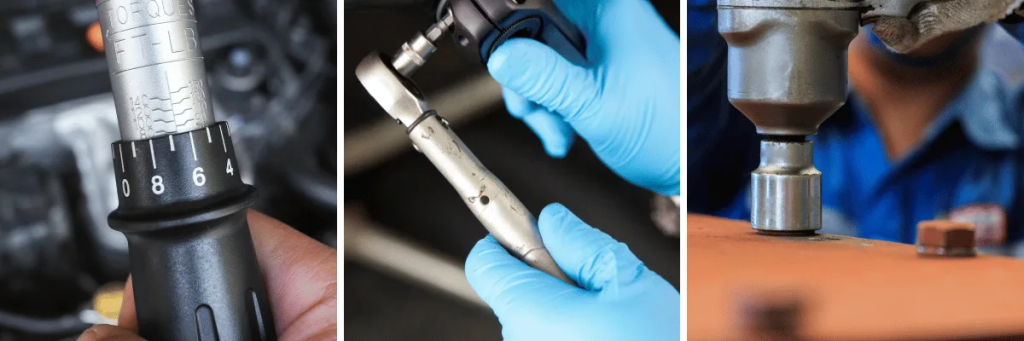
Torque wrenches are mechanical precision instruments that must maintain predictable behavior under repeated use. Yet even under normal operating conditions, torque wrenches naturally drift out of tolerance. Understanding why torque wrench drift occurs at a deeper mechanical and material level helps quality managers set appropriate calibration intervals, design risk-based maintenance strategies, and comply with industry regulations.
SIMCO provides accredited torque wrench calibration services supported by mechanical analysis, historical drift trend evaluation, and environmental control. By understanding the science behind drift, organizations can better protect fastener integrity and reduce critical assembly risks.
Mechanical Causes of Torque Wrench Drift
Torque wrench behavior depends on the interaction of springs, gears, pivot points, cams, clutches, and release mechanisms. Over time, each component undergoes measurable changes.
1. Spring Fatigue and Material Relaxation
Most click-style torque wrenches rely on a calibrated spring to generate a release point. With repeated loading:
- Elastic modulus decreases
- Stress relaxation occurs
- Metal microstructure changes
Even slight fatigue shifts the torque required to trigger the “click,” leading to drift.
2. Cam and Lever Wear
The cam and lever system that transfers force from the handle to the release mechanism wears microscopically with use. This causes:
- Delayed release
- Inconsistent torque application
- Variable trigger points
Wear typically accelerates in high-volume assembly environments.
3. Interaction of Lubrication and Friction
Internal friction changes over time as lubricants degrade or migrate. Increased friction elevates the force required to activate internal mechanisms, artificially increasing torque output until recalibrated.
4. Mechanical Shock and Load Spikes
Impacts—such as dropping a wrench or using it incorrectly—can:
- Bend pivots
- Crack internal components
- Shift spring seats
- Misalign gears
Even if the tool appears undamaged, calibration data often reveals significant drift following shock events.
Material and Environmental Influences
1. Temperature Effects on Metal Elasticity
Metal components expand and contract; springs become stiffer or softer depending on temperature, directly altering torque output.
2. Humidity and Contamination
Moisture and particulates disrupt lubrication and increase internal friction.
3. Corrosion
Corrosion reduces surface smoothness and changes mechanical characteristics within torque mechanisms.
4. Material Aging
Steel and alloy components experience microstructural changes over time, especially under repeated stress cycles.
Why Understanding Drift Matters in Regulated Industries
Aerospace, defense, medical device manufacturing, and energy sectors rely on torque tools for critical assemblies. Drift introduces:
- Joint preload variation
- Premature fastener failure
- Fatigue cracking
- Warranty risk
- Regulatory nonconformance
- Potential safety hazards
SIMCO’s accredited torque wrench calibration programs include historical drift tracking that helps organizations detect patterns and optimize calibration intervals.
Many enterprises also combine torque calibration with SIMCO’s calibration management services, allowing them to track drift across entire fleets of torque tools, analyze trends, and identify high-risk applications.
How Calibration Detects and Corrects Drift
During torque calibration, SIMCO technicians evaluate:
- Torque output at multiple points
- Linear vs. nonlinear drift behavior
- Bidirectional performance
- First-cycle vs. repeated-cycle behavior
- Release mechanism response
As-found data reveals how far drift has progressed since the last calibration. If adjustments are required, as-left values verify restored accuracy.
How to Reduce Torque Wrench Drift
1. Store Click Wrenches at the Minimum Setting
Prevents spring fatigue.
2. Avoid Overloading
Never use torque wrenches to break fasteners loose.
3. Follow Smooth, Steady Application
Avoid rapid loading or sudden impacts.
4. Use Tooling Only Within Rated Ranges
Overshooting specifications accelerates internal wear.
5. Apply Risk-Based Calibration Intervals
High-cycle tools need more frequent calibration and inspection.
Conclusion
Torque wrench drift is an unavoidable mechanical reality driven by material fatigue, friction, environmental conditions, and user practices. Through accredited calibration, drift detection, and robust documentation, SIMCO helps regulated industries maintain torque accuracy and protect the structural integrity of critical assemblies. Understanding the science behind drift supports safer, more reliable, and more compliant operations.
