

For law students and legal professionals alike, business law represents a unique intersection of rigid statutory frameworks and the fluid, fast-paced world of commerce. Researching in this field requires more than just finding a relevant case; it requires an understanding of how corporate structures, international trade, and evolving regulations interact.
However, many researchers fall into predictable traps that can undermine the validity of their legal arguments. Below, we explore five critical pitfalls in business law research and provide a roadmap for avoiding them.
1. Relying on Outdated Statutes and Repealed Regulations
The commercial world moves at the speed of light, and the law often struggles to keep up. One of the most common errors is citing a version of a statute that has been amended or a regulation that has been superseded by new administrative guidelines. In business law, specifically in areas like taxation, digital privacy (GDPR/CCPA), and securities, a six-month-old source might already be obsolete.
How to Avoid It: Always verify the “currency” of your legal sources. Use citators like Shepard’s (LexisNexis) or KeyCite (Westlaw) to ensure the law you are citing is still “good law.” If you are a student working on complex coursework, analyzing historical trends alongside current laws can be challenging. Many students find that studying business law case study examples helps them understand how experts track the evolution of a legal principle from its inception to its current application. Resources like Myassignmenthelp often provide these practical breakdowns to bridge the gap between theoretical law and its real-world execution.
2. Over-Reliance on Secondary Sources
Secondary sources—such as legal blogs, encyclopedias, and textbooks—are excellent starting points. They provide context and summarize complex doctrines. However, a significant pitfall is stopping there. A secondary source is an opinion about the law, not the law itself. Relying solely on a commentary can lead to “telephone-game” errors, where the original nuance of a judicial opinion is lost.
How to Avoid It: Use the “Source Pyramid” method. Start with secondary sources to get your bearings, but always end with primary authority:
- Level 1 (Base): Treatises and Law Review Articles.
- Level 2 (Middle): Statutes, Acts, and Treaties.
- Level 3 (Top): Landmark Judicial Opinions and Precedents.
3. Ignoring Jurisdictional Nuance
In business law, companies often operate across state or national borders. A common mistake is applying a “general” principle of law without checking the specific jurisdiction of the case. For example, Delaware’s corporate laws differ significantly from those in California or New York. In an international context, the difference between Common Law (precedent-based) and Civil Law (statute-based) can completely flip the outcome of a contract dispute.
How to Avoid It: Before beginning your search, define your “Jurisdictional Scope.” Ask:
- Where was the contract signed?
- Where is the corporation registered?
- Which court has the authority to hear this specific dispute?
4. Failing to Account for “Soft Law” and Administrative Guidelines
Business law isn’t just found in courtrooms; it’s found in the offices of administrative agencies. Pitfalls often occur when researchers ignore “soft law”—the guidelines, circulars, and “no-action letters” issued by bodies like the SEC, FTC, or the IRS. While these aren’t always strictly “law” in the way a statute is, they dictate how the law is enforced in the business world.
How to Avoid It: Check agency websites directly. Search for “Industry Bulletins” or “Advisory Opinions.” For instance, if you are researching antitrust issues, the DOJ and FTC’s joint guidelines are often more impactful on a company’s day-to-day operations than a ten-year-old court case.
5. Inadequate Case Law Analysis (The “IRAC” Failure)
Even if you find the right case, failing to analyze it properly is a major red flag. Many researchers “cherry-pick” a single sentence from a judgment that supports their view, while ignoring the “distinguishing facts” that might make the case inapplicable to their current problem.
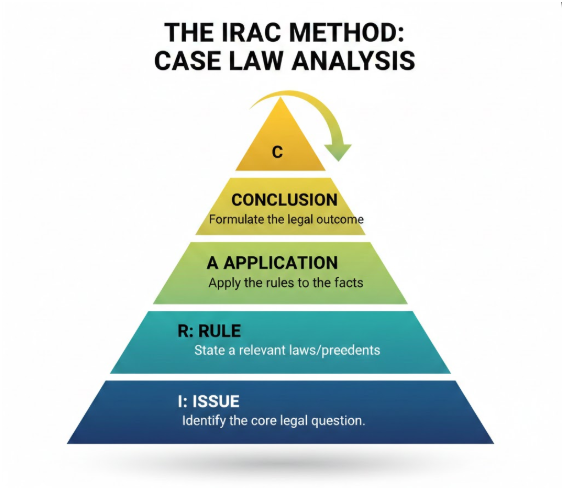
How to Avoid It: Use the IRAC (Issue, Rule, Application, Conclusion) framework rigorously. Ensure that the facts of the precedent you are citing are “on all fours” (substantially similar) with your current scenario. If the facts differ, you must explain why the underlying legal principle still applies.
For many students, the pressure of mastering this analytical depth while meeting tight deadlines can be overwhelming. This is why professional law assignment help has become a staple for those seeking to refine their research methodology. Expert guidance can help identify the “ratio decidendi” (the reason for the decision) of a case, ensuring your research is both deep and legally sound.
About The Author
I am Henry Lee, a legal educator and academic consultant with over a decade of experience in dissecting the complexities of corporate jurisprudence. My work focuses on making the intricate world of business law accessible to the next generation of legal professionals. Currently, I collaborate with the specialized team at Myassignmenthelp, where I provide strategic oversight and research guidance for students navigating rigorous law programs.
